Archives for August 2006

Forbes Follies

Wow, what a difference a few days makes. I disappear for two days (due to working and starting clinicals for my nurse aide class, leaving me only time for sleep) and during that time Forbes first pulled the inflammatory article, and then brought it back, but now with a counterpoint essay.

It seems that word spread fast through the blogosphere – a little too fast for the comfort of those at Forbes.com. The backpedalling has begun, and I’m not sure they’re finished yet.

The counterpoint provided by Elizabeth Corcoran is good, but still falls short in addressing this issue. She hints at calling out his misogynist ideas, but then falls back on simply telling how her marriage, as a career woman, doesn’t fit his guide. I guess I was expecting her counterpoint to have more bite to it.

She does make an excellent point in this paragraph:

The essence of a good marriage, it seems to me, is that both people have to learn to change and keep on adapting. Children bring tons of change. Mothers encounter it first during the nine months of pregnancy, starting with changing body dimensions. But fathers have to learn to adapt, too, by learning to help care for children, to take charge of new aspects of a household, to adapt as the mothers change.

Absolutely. Marriage takes change and adaptation from both people. Mr. Noer took pleasure in declaring how women should change when they become wives in order to make their marriages successful, but implied that men should make no changes to their own behaviors and actions. Instead of worrying that his wife won’t take care of his health if she works full time, a man should be capable of keeping track of his own medical needs. Surely he did it while he was single, or did his mother do it for him, even when he was on his own?

And what about the wife? Should she expect her husband to work less and spend more time worrying over her health and well-being? I thought marriage was a partnership, where things may not always be 50-50, but equality is always a goal. (The frightening thing is, I know men who subscribe to Mr. Noer’s guidelines, and I’ve seen hints of it from the stories some mommy bloggers tell of their husbands, too.)

I didn’t care for the wrap up that Ms. Corcoran provided, though:

So guys, if you’re game for an exciting life, go ahead and marry a professional gal.

Game for an exciting life? What? I was a career woman, and I can say I had an interesting life, but it wasn’t exciting. (My life now? Far more exciting. Living with a toddler is only slightly less exciting than wrestling with a bear.) Plus, what about those women who aren’t career women? Are they boring? I’m sure you didn’t mean it this way, but that sentence nearly confirms Michael Noer’s assertions. Exciting could equal dangerous or risky, right?

While Elizabeth Corcoran’s counterpoint was good, I just don’t think it went far enough to really challenge the original article.

My primary question to Forbes is: who thought this article was a good idea? If I’m not mistaken, writers generally must get their article approved before it is released to the web on a supposedly prestigious site for the world to see. So not only did Michael Noer write a misogynist article about why career woman are bad wives because they won’t cater to their husband’s every whim, but someone else read it and said, “Hey, this looks good!” Did this come across the desk the afternoon the editors had an end-of-summer margarita bash at lunch?

So if I’m still not happy, what can be done to make this situation better? I don’t know. I’ve already lost a lot of respect for Forbes, which I’m not sure can ever be won back. An apology might help. Pulling the article wouldn’t help – it would only serve to hide the evidence of what was done.

My suggestion to Forbes? Be a little more careful with what you publish, and don’t let inappropriate content go out to the public. Oh, and you might start with getting rid of this article. A list of “hot” billionaire heiresses might be a better fit for Spike TV.
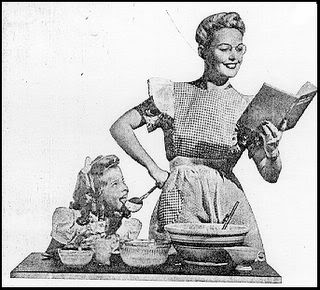


This Is 2006, Isn’t It?

I generally don’t pay attention to the news headlines Google gives me at the top of my Gmail page. Usually there’s something about someone winning a hot dog eating contest, or that oil companies are the next big investment (gee, you think?), or some other useless topic. But it’s hard to miss a news headline when it has the title “Reasons NOT to Marry a Career Woman“. Oh yeah, gotta go check that one out.

I expected something that was going to be far less sensational than the headline clearly designed to lure readers in. Instead, I was even more shocked at the content. The link, if you haven’t clicked it already in curiosity, is a slide show, put together by Forbes.com, counting the reasons why you, as a man, should run screaming from any woman who says her career is very important to her.

I’ll wait while you now rush to click the link. I understand, I did the same thing. I couldn’t believe this to be a real story, complete with research to back up the author’s position. While some of the points have validity, such as research showing that women who are focused on their careers and have higher earnings are less likely to get married (makes sense, right?), other points are simply sexist and insulting.

Case in point? How about this reason not to marry a career woman: your house will be messier. Apparently women who earn more than $15 an hour devote 1.9 hours less a week to housework as compared to their close-to-minimum wage sisters.

So clearly if you want a spotless house, (and of course you don’t want to do any housework yourself, for heaven’s sake) you need to marry a girl who won’t work, or who will only work some poorly-paying job (you know, to give her a sense of accomplishment). Otherwise your house will be dirty and you’ll just have to beat your wife for not doing her job of keeping house.

But wait, this isn’t a lone sexist reason in a group of perfectly sane ones. How about the reason: she’ll be more unhappy if she makes more than you do. Hear that, ladies? If we make more than our husbands, we’ll certainly be miserable, because even if we hold feminist views, deep down we know that our husbands should be the breadwinner. And if he’s the breadwinner, we can be free of that burden to instead pursue our part-time, “meaningful but not particularly remunerative job”. So they’re just doing us a favor, for our own happiness, and here we are not being nearly thankful enough. Geez, aren’t we just bitches?

My favorite reason (to hate) has to be this one: men are more likely to fall ill if they have a wife who works more than 40 hours a week. A woman who works more than 40 hours a week has “substantial, statistically significant, negative effects on changes in her husband’s health over that time span”. Translation: we’re killing our husbands because we work. The author goes on to explain that “wives working longer hours not do not have adequate time to monitor their husband’s health and healthy behavior, to manage their husband’s emotional well-being or buffer his workplace stress.”

Now, maybe I’m just being a little too modern here, but I had no idea that my husband was an extra child. Last I checked, he can take care of himself, make his own doctor’s appointments, and has the sense of mind to know when he’s sick or needs help. While I can express concern over his health, just as he can do for me, my role as wife does not include the duties of nurse and mental health practitioner. I’m pretty sure that requires some extra training.

Are men really still searching for women who will be their nurse, their housekeeper, their sex toy, their baby producer, and their mother rolled up into one? And I’m not just talking about people stuck in the 50’s – I’m talking about educated, intelligent men who read Forbes Magazine. (Well, I thought they were well-educated and intelligent. I’m doubting that now.) I guess I’m just baffled that in 2006 a woman can be thought of in such diminutive, sexist ways as soon as her status is converted to “wife”. It creates an entirely new warning for parents to tell their sons. In the 50’s, it was “Party girls make great dates, but you should never marry them.” Now will they tell them, “Career girls make great dates, but you should never marry them”?

Is it OK in today’s world to think of women as equals in the workplace and in society, until one of them becomes your wife, at which point she should take her proper role in the marriage of taking care of the husband, his castle, and the kids? Are some trying to create a new dichotomy for feminism, of being equal but only where marriage isn’t concerned?

Now, I’ll admit I’m not a career woman. I had aspirations of that at one time, but I gave up graduate school and my ideas of being a college professor because I decided it wasn’t for me, not because I was married and planning to have a child. And in not being a career woman, I can’t say for sure one way or another that this author pulled random statistics out of the air and the reality of American marriages looks nothing like this.

However, I just can’t see that a woman who chooses to pursue her own career goals is destined to wreck her marriage simply because of those career aspirations. I think it is possible for two people to be happily married, to each have a successful career, and to possibly have kids or no kids. Of course, the author infers that nearly all women want to have kids, so it’s a problem if they’re not having kids. The key, I think, is in how you approach your marriage. If you approach it as a power struggle, where one person must have control of the other, then you’ve got much bigger problems than a woman who chooses to work. And I think it is those problems in perception that will lead to divorce, not because the wife has a career.

Maybe instead of crafting a list of reasons not to marry a career woman, Forbes should write an article warning career woman how to spot and avoid sexist, spineless, controlling men who are actually looking for a servant and not a partner in marriage.

Edited to add: After a lot of digging through Forbes.com’s (poorly organized) website, I did finally find the intro to the slideshow. While it confirms that the slideshow is dead serious, it also acknowledges that the author is simply pulling together a lot of recent research. However, just because the intro isn’t (as) offensive doesn’t excuse the overall tone of the article, in my opinion.


The Power of Touch

(Here comes another messy post. This is such a hard topic to wrap my head around, so bear with me.)

Her Bad Mother had a beautiful post about the intense physical love she feels for her daughter, and asked if others feel this way also.

I have two takes on this, from the position of a daughter and from the position of a mother.

My mother’s family is what you might call “cold” upon first meeting them. Everyone is very nice, very pleasant to talk to, but there is a noticeable lack of emotion. We can carry on intelligent, engaging conversations, but at the end of the day, little is said about love, about emotional bonds, or about caring for others in our family. “I love you” is never spoken, and hugs are not exchanged. Love is something that is just understood – it is not expressed. And emotions are considered, especially by my grandmother, as something to deal with and force down, and not something to wear on your sleeve for all to see.

Somehow, I did not get the same genetic make-up that everyone else had. My mother and her sisters are like this, my grandmother is like this, and yet I was not. I was gifted with the intense, passionate emotion from my father’s side of the family, a family of people who love and hate with a fire that is hard to extinguish (gotta love Irish passion). They hug, they kiss, they express their feelings openly and without fear of those feelings being dismissed.

But I was raised by my mother and her family, and so I often found myself conflicted. I wanted to be hugged, I wanted to be told I was loved, but I was raised with a hands-off approach. I watched other kids having warm, loving moments with their parents, wondering why my mother and I didn’t behave that way as well. I knew she loved me – at least, my logical side assumed she loved me since she did so much for me. But any physical affection and touch was lacking.

However, the nurture side of the equation came into play also, so that when anyone did hug me, I felt awkward and embarrassed. I felt like it should be OK, but it wasn’t done in my family, and so it was foreign to me. Add in being molested as a child by a high school boy, and you’ve got a confusing message about touching others in a loving way. When my teen years came along, I was a ticking bomb of emotion, sometimes going off loudly, other times withdrawn and quiet. My poor mother didn’t know what to do with me – I was practically screaming for her to hug me, touch me, or show me that she loved me in some way, but would then dismiss any attempts she made. The physical aspects of love were short-circuited between us.

Once I was in college, the raging hormones of puberty behind me, my mother and I reached common ground. She realized that she had always been distant, because that was the way she was raised. She confessed to me that she never wanted to be so cold, but didn’t know any other way, since it felt so unnatural to her to want to hug me, stroke my hair, or touch me in any way. My teen years made it clear to her that I was not like her or others in our family, and that I needed more, and now that I was an adult we were able to discuss it openly.

To this day she’s still only told me once that she loves me (when I was getting ready to board a plane to go to England for a summer), but she does routinely hug me goodbye each week, and she tries to be affectionate with Cordy as well. I know she’s trying, and I can only imagine how hard the struggle must be between her natural feelings of motherhood and her upbringing.

For me, the first moment I saw Cordy, I had every intention of smothering her in love. I wanted to hold her little body close to mine, kiss her tiny hands and feet, and make sure that she realized every single day how loved she is. I was ready to break with the tradition of being physically aloof from a child.

There was just one snag: Cordy seems to have picked up the family trait.

As much as it pains me to acknowledge, Cordelia was not and still is not a cuddly child. As a baby she enjoyed being held in a sling, but didn’t care much for being touched. Any attempts at a kiss were met with a turn of the head or resistance. Trying to snuggle her resulted in her making her body rigid and pushing away with a cry. She rarely fell asleep on my chest – she was much more interested in pushing her head up and looking around.

The thought of having a child I couldn’t cuddle made me sick with depression. It felt like a big, black hole in my core: here is this child that was grown inside of me, and is half of my biological make-up, and now this part of me is outside of my body, but I can’t love it the way I want to.

Somewhere around 16 months, though, she learned a new game. The “beeeeah” game, which is essentially the hugging game. She would walk back and forth to Aaron and I, collapsing into each of us and saying “beeeah” as she sort-of hugged us, and then walking to the other person and repeating it. I don’t think I could have been happier, even if she had spontaneously said”I love you, mommy.”

While she still doesn’t like to be kissed or hugged that much, when it is on her own terms she will allow it. And right now, I’ll take what I can get, while slowly pushing for a little more affection as time goes by. After all, this period of life goes by so quickly. It won’t be long before she’s a teenager full of hormones and emotion, and I’d like to lay the groundwork for our physical love now and get in all the hugs I can before she reaches the point where she is embarrassed of me.


What you can’t see in this picture is the swing she took at me after this was snapped.


I May Soon Regret Her Growing Vocabulary

This morning:

(I walk into the kitchen. Cordy comes running after me.)

Cordy: Muuuuk! Muk! I nee muk! I nee muk!

(Note: this is her pleading, whiny, clearly-I’m-dying voice)

Me: Sorry Cordy, you’re not getting milk.

Cordy: I nee muk!

Me: (pouring a sippy cup for her) No, Cordy. You’re getting juice.

Cordy: (pause, as she thinks) Juisse?

Me: Yes, juice.

Cordy: Juisse! I nee juisse! I nee juisse!

Me: (handing her the sippy cup) Way to re-prioritize on the fly, baby.


How Did We Live Without Cell Phones?

Seriously, how did the human race survive before the invention of cell phones? It astounds me how many people have one permanently affixed to their ears nowadays.

Earlier this week, I was waiting in line at a drive thru, and when the person ahead of me pulled up to place her order, she actually told the person working at McDonald’s to hold on, while she finished telling whoever was on the other end of the phone about the guy she met last night. I know this because she was talking so loud I couldn’t help but hear her conversation. She finally placed her order, but even when paying and picking up her food, the cell phone never left her ear.

I’ve even had students in my office take phone calls during an advising session. Most tell the other person they’ll call them back, but some don’t care that they’re sitting in my office, and carry on five minute or longer conversations. The worst person I met got calls three times during our 45 min. meeting, and talked to each one of them.

When I was flying to and from BlogHer, I was amazed that now they announce, at the exact moment the plane touches down, that you’re now allowed to turn on and use your cell phones. It’s been 10 years since I flew, and in 1996 people weren’t going through cell phone withdrawal on a two hour flight. Or an eight hour flight, for that matter. But now, as soon as the message is given, the sounds of cell phones powering up is heard, and seconds later half of the people are chatting away with someone not on the plane. (Aside from the idiots in front of me, on the way back to Columbus, who took the time to call their friends who were sitting 10 rows ahead of them to ask about dinner plans.)

I won’t even begin to talk about the people who answer their cell phones and talk while using the facilities in a public restroom. Or the fact that kids as young as six are now carrying the damn things around like some elementary school status symbol.

What conversations are so important that they can be conducted while meeting with someone or while in the bathroom? Personally, were I on the other end of the line and heard the distinctive sound of tinkling, I would ask if I could call them back.

Cell phones are also completely erasing any notice of the world around you. I see so many people in public places yaking away on their phones, oblivious to anything around them. There are people who nearly get hit by cars crossing the street because they’re not paying attention. And what happened to talking to other people around you? Cell phones erase the need to ever make small talk, or get to know the people you’re waiting in line with, or to speak with any stranger ever.

Forget the internet – I think cell phones are causing us to become more isolated than ever. The phone is programmed with the numbers of our friends and family, ready to talk to at a moment’s notice. The phone makes it possible to never be apart from those you are closest to, because cell phones are allowed nearly everywhere you go. At least on the internet we can meet new people.

Now, don’t get me wrong – I love my cell phone. It is a convenience that I enjoy having. I like being able to change plans on the fly and let everyone know, or let Aaron know when I will be late getting home, or ask if I should pick up dinner on the way. But I think that many people use their phones way too much, and in owning a cell phone, they have completely forgotten all rules of etiquette. I simply can’t understand why someone would want to be constantly talking to their friends day and night. Wouldn’t you run out of things to say? Don’t you ever get tired of talking and just want to listen to the radio or enjoy some silence?

And I can’t see giving Cordy a cell phone anytime soon. And if we were to give her one before she’s a teen, it would be one of those Firefly phones that would only let her call the people we’ve programmed in, and it would have a very limited number of minutes. She doesn’t need a phone to stay in touch with her friends 24/7.

The truth is, we did manage to survive before the invention of the cell phone. As a kid, I spent many summer afternoons running all over the neighborhood. I didn’t have a cell phone, and yet my mom still managed to know where I was. How? I checked in with her, either by stopping back by the house, or calling her from a friend’s house. If I was really desperate, I usually had a quarter and could use a pay phone to call her. If I needed to come home early from the public pool, I would either call my mom on the pay phone, walk home, or suck it up and wait for her to come get me at the arranged time. And instead of talking to my friends on the phone all day, I’d go over and spend time with them. My relationships with my mom and my friends did not suffer due to a lack of a cell phone.

One more thing: those new Bluetooth wireless headsets? Not only are they annoying (if you’re on the other side, you’d think the person was talking to you or just insane), but they’re ugly, too. Looking at the piece of plastic and metal sticking out of someone’s ear makes me want to go up to these cyborgs and say, “Are you a Borg? Have you been assimilated?” You don’t look cool – you look dumb, and if I don’t see the headset, I often wonder if you’ve escaped the mental hospital as you talk to yourself.

If you’re a cell phone addict, I give you this challenge: during one of the times you’re on the phone just because it’s something to do to keep you from being bored, or having to acknowledge the people around you, don’t use it. Yes, turn it off and keep it stored away. Just once, enjoy the silence, or listen to your radio in the car, or say hi to someone around you as you wait for the bus. Take the time to notice the world around you. Your friends and family will still be accessible half an hour later.

Related Posts Plugin for WordPress, Blogger...